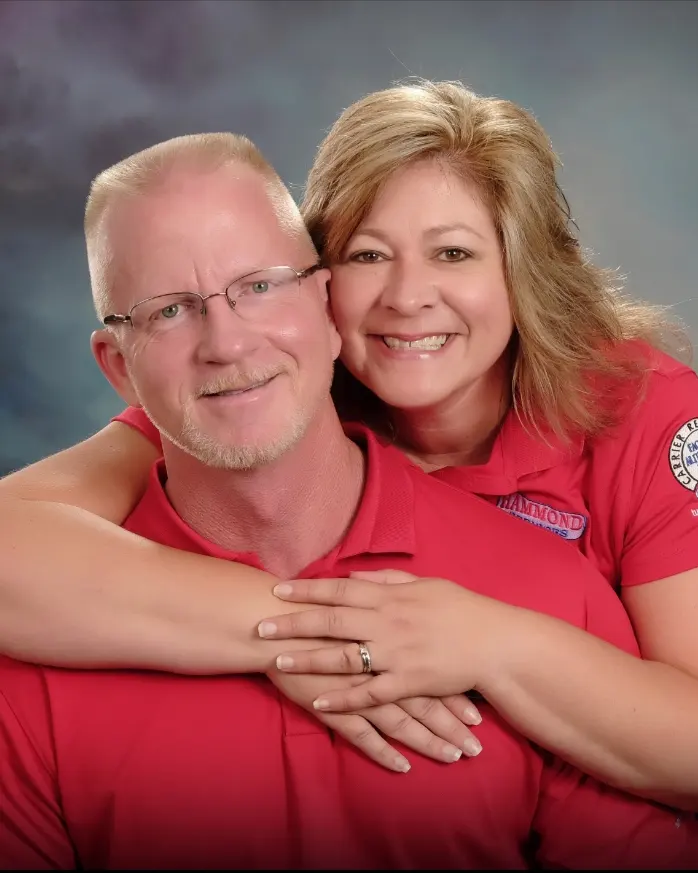
David Hammond and his employees at Hammond Services are recognized nationally as “Contractor of the Month” by National Comfort Institute.  

NCI is the leader in HVAC diagnostics for both air flow and combustion related topics. They provide training, equipment and consultation to HVAC contractors around the world so they can
provide more comfortable and energy efficient homes and offices.

To read this article, scroll down.

“Do the right thing.” David Hammond will readily tell you that those four simple words are the solid foundation the success of his company is built on. “Anyone can say it, but not everyone does it”, David says. He goes on to explain that his primary job as President is to make sure the company lives those words every day. That’s only one of the reasons that Hammond Services in Griffin, Georgia is the August NCI Member of the Month.

Hammond’s has served the southern metro area of Atlanta for over 30 years. Founded by David’s father in 1979, the company focuses exclusively on service, add-on, and retrofit sales. The company is primarily involved in HVAC work, but offers plumbing and electrical services as well. After graduating from college with a degree in civil engineering, David worked for a large national company for several years before joining the family business in 1994. He has been President of Hammond’s since 2003 and under his leadership the company has grown to nearly 40 employees. David’s philosophy is that offering the customer the very best value for their dollar is critical. “We are constantly striving to be better as a company”, he says, “and we’re always looking to learn new and better ways to do things.” Read More…

Last April he discovered one of those new things when he attended the NCI Summit in Jacksonville. According to David, “I attended the pre-Summit training session with Rob Falke, and noticed that the other people in the session were pretty sharp. And somewhere in the middle of that training the light dawned.” He could see that the NCI air testing and diagnostic methods delivered the missing pieces to the puzzle of how to really separate his company from the competition, as well as increase revenues and profit.

In May David and his operations manager, Wayne Hughes attended the NCI Fast-Track Implementation class, and the entire picture came into clear view. By June David brought in onsite training for his staff to get everyone up to speed on the new processes. At first a few of the technicians and installers were a little hesitant about some of the changes. But it didn’t take long until they began to see the benefits in the systems they were servicing and installing, like reduced static pressures, increased airflow, and higher customer satisfaction. Like David, they were impressed and excited by how some relatively minor changes in what they were already doing could have such a major impact. In fact, David was so excited that he decided to take the balancing hood and go back into the field himself. He enjoys doing the follow-up testing and diagnostics whenever a CoolMaxx report indicates a need for system improvement. In one week he sold over $14,000 in duct renovations and has been averaging between 50-70% gross margins.

“NCI is the best thing that’s happened since we started the business”, David states without hesitation. “Now we know exactly where we’re headed in the future … air diagnostics.” And in the 6 weeks or so since Hammond’s implemented the new processes, he believes they have already recouped the cost of attending the Summit, implementation training, the onsite training, as well as the cost of new tools and instruments. He has already scheduled additional onsite training in August for carbon monoxide and combustion diagnostics and testing.

One last thing that David wanted to stress is that support for change like this has to come from the owner of the company. He emphasized, “The owner needs to be the primary champion if these changes are going to work and if you expect buy-in from your employees.”

Dedicated NCI members like Hammond Services are what help keep our industry strong and vibrant! So for all they do, join us in congratulating David and the great team at Hammond’s as our Member of the Month.

Find out more about them online at www.hammondservices.com

Bill Jones with his $100 checkCongratulations to Mr. Bill Jones of 700 Tanyard Road in Zebulon, GA. He is the winner of the sign contest for the month of January. He has always been pleased with the Heating & Air service he gets from Hammond Services and is very thankful to win the sign contest for January and receive his $100 check. He said that James, our HVAC tech, always does a great job.

Thank you for your continued support!

If you have some time this weekend, you can save yourself some cash with this toilet replacement project and DIY with a little bit of patience and know how.

If a toilet has become damaged or is overly inefficient, then it is time for a new model that is water responsible.  Toilet replacement can be broken down into three main tasks:  Removal of the old toilet, the removal and replacement of the wax ring and the installation of the new toilet.

There are several types and models available for your new toilet, so be sure to properly research the best kind for your needs.   There are models that are all one piece, but most likely you will need to purchase the base and tank separately.  You will also need to buy the wax ring kit to seal the base to the sewer line.  This kit should include the mounting bolts and the finishing caps that go over the bolts.  You may also want to purchase a cement mixing tub to aide in the removal of the old toilet.  If the water supply valve on the old toilet is damaged or has rust, you should consider replacing it along with the toilet tank hose.

Toilet replacement tools needed are: an adjustable open end wrench or socket wrench, large flat head screwdriver, mini hack saw, disposable plastic scraper, plastic trash bags, paper towels, latex gloves and a utility knife or box cutter. It is also helpful if you have a large sponge to aid in removing water from the toilet tank and bowl.
Remove toilet by turning off the water supply valve and remove lid to the toilet tank.  Flush the toilet to alleviate any water pressure and disconnect the water supply valve hose from the fill valve shank. 

Remove the plastic mounting bolt caps from the base and unscrew the lock nuts holding it to the floor.  You may need to use the mini hack saw to remove the bolt if the threads are stripped or if the bolt is corroded.  Score any caulking around the base of the unit with the utility knife, then position the cement mixing tub close to the base of the toilet and once the bolts are removed, lift with your legs to remove the toilet unit from the floor and place in the plastic tub.

To remove the wax ring, put on latex gloves and have trash bags and paper towels at the ready.  Use the plastic scraper to remove the wax from around the ring, wiping it onto the paper towels and throw the wax away.  Next, use the scraper to pry up the rubber lip of the wax ring and throw it away.  Remove the bolts from the sewer flange and throw those away as well.  Clean up any remaining wax with the scraper and paper towels.  This should render the opening free from just about all wax and any debris.

If there is going to be a delay in toilet replacement from old to new – you can create a plug for the sewer line hole by partly filling a plastic trash bag with some paper towels, wadding it up into a kind of stopper and then plugging the hole.  This will keep most of the gases from the sewer line from entering the house.  Remove the plastic bag stopper before installing the new toilet. 

Be sure to inspect the sewer flange for any damage before toilet replacement continues.  If there is any damage, it will need to be repaired first. The #1 cause of bathroom floor damage is improper installation of toilet flanges and/or defective flanges. If replacing the flange, make sure that it is installed so that it rests on top of the finished floor.

Follow the directions on how to install the wax ring.  Center and adjust the ring as needed into the sewer flange.  Now install the mounting bolts into the guides along the edge of the flange and make sure they are perpendicular.  Place the unit over the wax ring and pass the bolts through the mounting holes on each side of the base.  You should feel the wax ring compress around the toilets drain pipe as you push down to seal it.
Take the plastic finishing washers and install them as directed onto the anchor bolts, properly tightening the bolt to secure the base to the floor, making sure the toilet does not move at all.  You can then trim the bolt to a ¼ inch above the nut with the mini hack saw, covering them with the finishing caps.
 
Now you can install the tank according to the directions and hook up the water tank hose and water supply valve again.  When this is done, you can turn on the water supply valve and allow the tank to fill with water.  Watch for leaks and adjust the water level.  Install the seat and your toilet replacement is complete!

Going “green” saves you even more money! Read this article we found below.

Did you know that if every one who watched Super Sunday had switched to a WaterSense labeled toilet, it would have saved nearly 200 million gallons of water on that in sync half-time flush?
 
Toilets are by far the main source of water use in the home, accounting for nearly 30 percent of an average home’s indoor water consumption. Older, inefficient toilets also happen to be a major source of wasted water in many homes. Replacing these toilets with
WaterSense labeled toilets could save nearly 2 billion gallons per day across the country-that’s nearly 11 gallons per toilet in your home every day!
 
With this Water Savings Calculator you can see yourself, how much water you can save by replacing older, inefficient toilets in your home. Plus, if your home was built before 1994, you may also qualify for a toilet rebate. You will need to verify with your water supplier if any rebates are currently in effect, and criteria for eligibility.

Contact Hammond Services today if you want to save money and water from being flushed down the toilet!

Here’s some information that you may want to know!  It’s about a brand new rebate program being offered through the State to promote the purchase of Energy Star appliances. This is a limited program that started on Feb. 12th, and will end when the rebate money runs out. This can be combined with the current Federal Tax Credit program as well. Read Below for more details.

Since February 12, 2010, the State Energy Efficient Appliance Rebate Program provides Georgia residents with rebates ranging from $25 to $199 on ENERGY STAR rated appliances. ENERGY STAR appliances eligible for the program include clothes washers, dishwashers, air conditioners, heat pumps, furnaces, water heaters, refrigerators and freezers. The total amount available for rebates is $8.6 million. This is a first come, first serve program until the money is used up. Purchases made prior to February 12, 2010, will not be eligible.. Detailed information can be found here.